miércoles, 12 de marzo de 2014

Commentary about the book

In my opinion this book is really interesting. I like it! Perfectly, it reflects the situation of North America in the 18th century and the next extinction of the red man. The fights between Mohicans and Hurons have sometimes been a bit boring because they are very repetitive. But the rest has been good: the plot is really gripping. The real loyalty of the Mohicans to the sisters and the British is the thing that I most like. I strongly recommend the book for everyone. Don't miss it! 

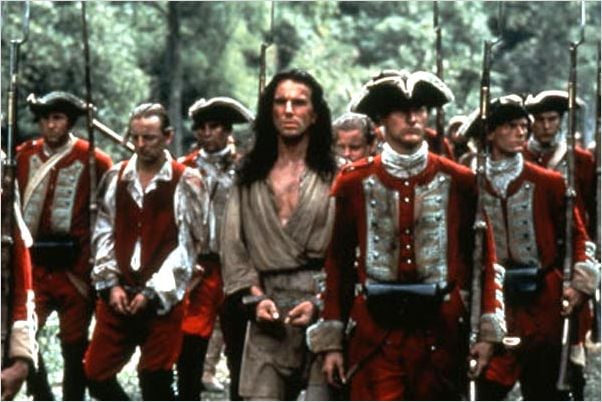
Apart of the book, there is a film based on it. It was made in 1992. Here, I share the trailer for you!


And there is also an animated television series with many chapters. I share the first part for you.


CHAPTER 10: TO THE HAPPY HUNTING GROUND

Uncas spoke with the great chief Tamenund. The Delaware realized that Uncas and their friends were good people. Delaware and Mohicans were friends, so they didn’t want to kill anybody. The chief threw Magua out of his camp. Furiously, Magua took Cora by the wrist and they went to Hurons’ camp.

After this, the Delaware wanted to fight with the Mohicans to save Cora. They divided into different groups. Gamut appeared in the forest. He wanted to fight for help Cora. The battle took place in the dry bed of a river. There was a long exchanged of shots between the two sides.

Uncas went to the cave where Cora was. But Magua appeared with two warriors. Magua gave Cora the option to choose: be his wife or die. She preferred to die and Magua killed her. Uncas couldn’t do anything. Magua also stabbed the knife in him. Uncas died. Later Hawk-eye saw his dead friends and he shot Magua until the death.  

The next day, Cora and Uncas were buried. The Delaware had won the war but they were very sad. Gamut sang some hymns. Chingachgook recognized his son’s brave and Tamenund added that the time of the red men was finished and at least he could see the last of the Mohicans. 

Vocabulary:
Drag: (verb) Pull (someone or something) along forcefully, roughly, or with difficulty: arrastrar, rozar.
-We need to drag this heavy box to the next room. 

Stand back: (verb) Withdraw from a situation emotionally in order to view it more objectively: mantenerse alejado.
-If I were you, I would stand back from him.

Indeed: (adverb) Used to emphasize a statement or response confirming something already suggested: ciertamente. 
-There is indeed a difference between the Chinese and the French people. 

Truce: (noun) An agreement between enemies or opponents to stop fighting or arguing for a certain time: tregua, pausa.
-This war’s truce has been very short. 

Step out: (verb) Leave a room or building for a short time: salir a dar una vuelta.
-I used to step out with my friends on Friday.

Stream: (noun) A small, narrow river: arroyo, riachuelo.
-The stream was dry last year. 

Obey: (verb) Submit to the authority of (someone) or comply with (a law): obedecer.
-He always obeyed his father. 

Ledge: (noun) A narrow horizontal surface projecting from a wall, cliff, or other surface: plataforma, saliente, cornisa. 
-He fell over with the ledge.

Stab: (verb) Thrust a knife or other pointed weapon into (someone) so as to wound or kill: apuñalar.
-The murderer stabbed her many times. 

Mourn: (verb) To be sad because someone has died: llorar, lamentarse.
-They mourned a lot his death.

CHAPTER 9: MAGUA, HURON CHIEF


The Hurons saw that Uncas had escaped. They also helped Magua, who had ropes around his ankles and wrists and a gag. Magua was furious. Hurons realized that the medicine man and the Mohicans cheated him. They decided to attack them and Magua led them in the battle.

Hurons went to Delaware camp, who were allies of French but with Hurons were enemies. The Mohicans and the British were in this camp and Hurons knew it. After a conversation between Magua and Delaware chiefs, Hawk-eye, Heyward and the two sisters were brought out of the hut, where they hid them. Magua wanted to kill Hawk-eye. But Cora tried to reason with a Delaware chief persuading him to help them against the Hurons.  


Vocabulary:
Pull up: (verb) (Of a vehicle) come to a halt: detenerse, frenar.
-The car pulled up quickly when the traffic light was red.  

Council: (noun) An advisory, deliberative, or administrative body of people formally constituted and meeting regularly: consejo.
-The council agreed that the man left the prision. 

Manage: (verb) Be in charge of (a business, organization, or undertaking); run: dirigir, manejar, gestionar.
-You must manage the business without my help. 

Lodge: (noun) A beaver’s den (A wild mammal’s hidden home): madriguera de castor, cabaña.
-Beaver lodges are the work of a master builder.

Ally: (noun) A state formally cooperating with another for a military or other purpose: aliado.
-The allies were the most important help in this war.  

Sharp: (adjective) (Of an object) having an edge or point that is able to cut or pierce something: afilado, puntiagudo.
-Cut the cake with a very sharp knife. 

Chest: (noun) The front surface of a person’s or animal’s body between the neck and the stomach: pecho, torso.
-He crossed his arms across the chest.

Bring out: (verb) Cause someone to go on strike: suscitar, resaltar, enfatizar.
-You need to bring out your protest for get new laws.

CHAPTER 8: A BEAR TO THE RESCUE

Heyward and Uncas were in a hut whit the Hurons. Suddenly, a warrior entered. He was Magua! The Hurons’ chiefs told him that they had a new prisoner. When Magua discovered that Uncas was the prisoner, he was excited. Next day, Magua would kill him. Uncas was brought to a prison.

Later, a chief asked the medicine man (Heyward) for his help. They arrived to a cave. On the way, a bear had been following them. In one room, there was a sick woman that he had to take away her evil spirit. The Huron chief left Heyward with the woman and the bear. The bear was Hawk-eye, who wore a suit. After they were talking, Heyward found Alice in another room’s cave. But, in that moment, Magua appeared. Right away, a real bear came and attacked Magua. Alice, Heyward and Hawk-eye went to the forest.

Now, they needed to rescue Uncas. Gamut led them to the prison hut. They entered and exchanged their clothes, so Gamut with Uncas’ clothes stayed in the prison. Heyward and Uncas, with Gamut’s clothes and the bear suit, hid into the forest. 


Vocabulary:
 Pale: (adjective) Light in colour or shade; containing little colour or pigment: pálido.
-These pale flowers are perfect for my garden.

Growl: (verb) (Of an animal, especially a dog) make a low guttural sound of hostility in the throat: gruñir.
-I’m afraid of dogs when they growled me.

Gag: (verb) Put a gag (a piece of cloth put in or over a person’s mouth to prevent them from speaking) on someone: amordazar.
-The murderers gagged the four hostages.

Palefaces: (noun) A name supposedly used by the North American Indians for a white person: rostros pálidos.
-I’m a paleface.

Fool: (noun) A person who acts unwisely or imprudently; a silly person: tonto, necio.
-I felt a bit fool.

Exchange: (verb) Give something and receive something of the same kind in return: intercambiar.
-We exchanged addresses.

lunes, 10 de marzo de 2014

CHAPTER 7: INTO THE HURON CAMP

In this chapter Heyward, Hawk-eye, the two Mohicans and Munro continued to find the two sisters. They travelled on over land and they rested a day. Next day, Uncas saw the horses’ tracks and they followed them. Not far away the two horses were eating grass, so the Hurons and the sisters were near. Later, they decided to explore in groups.

When the sun was going, Heyward and Hawk-eye saw a strange Indian next to a lake. He was David Gamut! He was dressing as a Huron. The singing teacher said them that Cora and Alice were safe. But Cora was with the Delawares and Alice with the Hurons, so they needed to separate them in groups again. Heyward painted his face like Gamut.


After of this, Gamut and Heyward went to the Hurons camp. Heyward said to Hurons that he was a medicine man. They believed him. Suddenly, some Hurons warriors appeared in the camp with two prisoners. One of them was Uncas. An old woman decided to kill the other prisoner, who was a Huron, because Uncas said that he was a coward. 


Vocabulary:
Print: (noun) An indentation or mark made on a surface or soft substance: huella, marca.
-The prints were very suspicious.

Riderless: (adjective) Without a rider: sin jinete.
-The horses can’t be riderless.

Cloak: (noun) A sleeveless outdoor over garment that hangs loosely from the shoulders: manto, capa.
-The brown cloak is the thing that I most like.  

Look over: (verb) Looking towards a place: revisar, mirar.
-We looked over into the garden.

Moose: (noun) A large deer with palmate antlers and a growth of skin hanging from the neck, native to northern Eurasia and northern North America. Also called elk in Britain: alce.
-The moose is a horrible animal.

Hut: (noun) A small, simple, single-storey house or shelter: choza, cabaña.
-We walk away from the town towards the forest’s huts.

Trip: (verb) Catch one’s foot on something and stumble or fall: tropezar.
-He tripped over his cat.

Wise: (adjective) Intelligent, clever: inteligente, listo.
-She seems kind and wise.

Reed: (noun) A tall, slender-leaved plant of the grass family, which grows in water or on marshy ground: carrizo, junco.
-The river was surrounded by a lot of reeds

domingo, 9 de marzo de 2014

CHAPTER 6: TRACKS FROM THE BATTLEFIELD

Three days later the tragedy, the Mohicans, Heyward, Hawk-eye and Munro tried to find Cora and Alice. In the forest they found a moccasin, Gamut’s book and one earring. Because of the different tracks and signals, Chingachgook deduced that Magua had captured the girls and the sing teacher was with them.

They returned to the ruins of the fort to rest for a while. The next morning they were down the lake into a canoe. When they came near to the Hurons, they saw a fire in an island. The tribe heard them and they started to shoot. Hawk-eye, with his rifle, reached some of them. But, in a short time, a lot of Hurons’ canoes appeared. The Mohicans, Heyward, Hawk-eye and Munro landed at the edge of the lake and they hid the canoe and went into the forest.

Vocabulary:
Leather: (noun) A material made from the skin of an animal by tanning or a similar process: cuero
-All my boots are made of leather.

Northwards: (adverb) Towards the north: hacia el norte.
-England is northwards of Europe. 

Briefly: (adverb) For a short time; fleetingly: brevemente.
-She looked briefly at the road before she crossed.

Crawl: (verb) Move forward on the hands and knees or by dragging the body close to the ground: arrastrado.
-They crawled from under the table.

Inch: (noun) A unit of linear measure equal to one twelfth of a foot (2.54 cm): pulgadas.
-Tommy measured 60 inches last year.

Paddle: (verb) Move through the water in a boat using a paddle or paddles: mover con una pala o paleta.
-She paddled along the coast.

CHAPTER 5: THE SIEGE OF FORT WILLIAM HENRY

The French and the Hurons were around Fort William Henry. They attacked continuously. Hawk-eye was returning to Fort Edward when the French caught him. Heyward went to talk about this with General Munro. In this conversation Munro asked Heyward if he loved one of his daughters. Heyward said yes: he loved Alice. They decided to help Hawk-eye, who also had news of the reinforcements of General Webb. 

Munro and Heyward met Montcalm to talk. Surprisingly, the French had the General Webb’s letter, which left horrified Munro. The reinforcements never arrived. Montcalm proposed Munro to leave the Fort without fights. And, of course, he accepted. 

The next day, people of Fort William Henry left the place. The French and the Hurons lied and they killed British women and children. Magua found Munro sisters and Gamut, and he took Alice into the forest. Cora and Gamut followed him.


Vocabulary:
Surround: (verb) Be all round (someone or something): rodear, envolver.
-The house is surrounded by trees.

Siege: (noun) A military operation in which enemy forces surround a town or building, cutting off essential supplies, with the aim of compelling those inside to surrender: acoso, calvario.
-The siege can't last more than 10 years.

Businesslike: (adjective) Having or indicating an efficient, practical, and systematic approach to one’s work or a task:  práctico, metódico.
-You have to be businesslike in front on this situation.

Coward: (noun) A person who is contemptibly lacking in the courage to do or endure dangerous or unpleasant things: cobarde.
- If you weren’t a coward, you would be more successful.

Hymn: (noun) A religious song or poem of praise to God or a god: himno, canto. 
- These hymns are too sad.

CHAPTER 4: SAFE AGAIN

The Mohicans appeared after they killed a Huron to save Heyward. Now they were four Hurons against three Mohicans and one English. All of them fought for a while. Finally, the Mohicans thought that Chingachgook had killed Magua, but he was still alive. Magua ran off to the forest. The Mohicans and the English decided to move off towards Fort William Henry.


They arrived to an old wooden house in the middle of the forest. They stayed there for rest and hide the Hurons. Magua and his tribe came near to the house, but the representative stones of death kept away them from the hiding place because they feared the ghosts. 

Later, when the Hurons weren’t, they continued to the Fort. They arrived but the Fort William henry’s soldiers didn’t know who they were, so they shot them. In spite of this, Cora and Alice could cry their father and he realized that the Mohicans and the English weren’t a threat. General Munro opened the door for his daughters and friends. 


Vocabulary: 
Forward: (adverb) In the direction that one is facing or travelling; towards the front: hacia adelante.
-He started up the engine and the car moved forward.

Slope: (noun) A surface of which one end or side is at a higher level than another; a rising or falling surface: cuesta, pendiente, ladera. 
-The slope is very long. 

Deer: (noun) A hoofed grazing or browsing animal, with branched bony antlers that are shed annually and typically borne only by the male: ciervo.
-Bambi is the most famous deer in Disneyland. 

Spring: (noun) A place where water or oil wells up from an underground source, or the basin or flow formed in such a way: manantial, fuente.
-This place has a lot of springs

Thick: (adjective) With opposite sides or surfaces that are far or relatively far apart: grueso, espeso. 
-The forest, where we were living for 10 years, has a lot of thick trees and bushes. 

Dry: (adjective) Free from moisture or liquid; not wet or moist: seco.
-The jacket kept me dry.

Fear: (verb) Be afraid of (someone or something) as likely to be dangerous, painful, or harmful: temer.  
-I fear you. 

Fog: (noun) A thick cloud of tiny water droplets suspended in the atmosphere at or near the earth’s surface which obscures or restricts visibility: niebla.
-I hate the fog that there is in Valladolid. 

CHAPTER 3: MAGUA'S PLANS

Cora, Alice, Heyward and Gamut were in the cave. The Hurons have gone and they could keep calm for a short time. Heyward put branches and blankets into the entrance of the cave for hide them. When they were well hidden, Gamut started to sing.

Then, they heard the arrival of the Hurons by a cry. Hurons were in the cave, but they didn’t achieve to see the sisters and the two men. The tribe decided to go out and to try find them in another place.  They seemed to be safe, when, suddenly, Magua appeared on the other cave entrance. Heyward shot him and the sound of this alarmed the Hurons.
Hurons caught the four English and brought them with the tribe. Magua explained his plan: he wanted to marry with Cora. If she accepted, the prisoners would be taken to Fort William Henry. Cora didn’t accept, so Magua were angry and an Indian tried to harm her. Heyward pulled on him. The Indian was stronger than Heyward, but a rifle shot from Hawk-eye ended his life helping the English soldier. 


Vocabulary:
Grim: (adjective) Very serious or gloomy: adusto, serio.
-I'm afraid when you have a grim face.

Faint: (adjective) Of a sight, smell, or sound barely perceptible: débil.
-We heard faint cries, so the animal was far. 

Widen: (verb) Make or become wider: esanchar, aumentar.
-The gap between us has widened.

Daylight: (noun) The first appearance of light in the morning: amanecer.
-I love the daylights in the mornings.

Bank: (noun) The land alongside or sloping down to a river or lake: orilla, rivera.
-Stay away from the bank of the lake! 

Tomahawk: (noun) A light axe used as a tool or weapon by American Indians: hacha de guerra.
-You must be careful with this tomahawk

Far off: (verb) Remote in time or space: remoto, lejano, distante. 
-They are far off us. 

Beat: (verb) Defeat (someone) in a game or other competitive situation: vencer, superar.
-I can beat all your records. 

sábado, 8 de marzo de 2014

CHAPTER 2: BEHIND THE WATERFALL


In this chapter the sisters and the two men (Gamut and Heyward) agreed that the Mohicans led them to the Fort. They decided to leave that place and to hide from the Hurons. They also needed to kill Gamut’s horse.

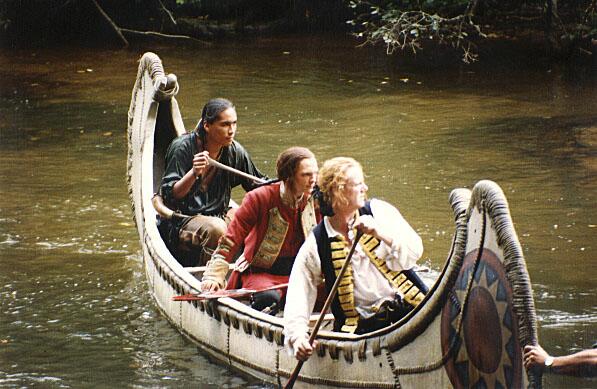
The Mohicans pulled a canoe where Alice and Cora sat. After a while they arrived to a valley with a waterfall. They entered in a cave and stayed there. Later, they cooked meat and Uncas put two blankets up to cover the light of the fire. The sisters and Gamut sang happily. Because of they heard a noise outside, the men watched over while the ladies slept.
The next day, Hurons attacked the cave and Gamut received a shot and he was unconscious. Heyward and Hawk-eye fought against the Hurons but the bullets ran out and Huron stole the canoe with the supplies. They were dead men!

But Cora said that they needed to talk his father and an army would come to save them. The Mohicans went out to find help and the British stayed in the cave. 


Vocabulary:
Scout: (noun) A soldier or other person sent out ahead of a main force so as to gather information about the enemy’s position, strength, or movements: explorador.
-The scout knew where the correct path was. 

Lead: (verb) Be a route or means of access to a particular place or in a particular direction: conducir, guiar, llevar.
-Can you lead us to the town, please? 

Track: (noun) A rough path or road, typically one beaten by use rather than constructed: camino, trayectoria, vía.
-If you follow this track, you'll be lost.

Steer: (verb) Guide or control the movement of (a vehicle, vessel, or aircraft), for example by turning a wheel or operating a rudder: dirigir, manejar.
-The tourist guide steered us very well. 

Blanket: (noun) A large piece of woollen or similar material used as a covering on a bed or elsewhere for warmth: manta.
-I slept on the ground covered by my blanket.

Wrist: (noun) The joint connecting the hand with the forearm: muñeca.
-My wrists are very little. 

Bullet: (noun) A metal projectile for firing from a rifle, revolver, or other small firearm, typically cylindrical and pointed, and sometimes containing an explosive: bala.
-A bullet crossed the tree.

Fetch: (verb) Go for and then bring back (someone or something) for someone: ir a buscar, traer.
-He ran to fetch help.