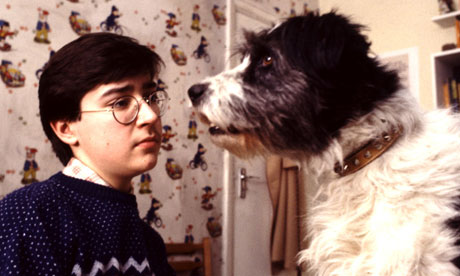
The teenage years are the most important years of your life.
It is
generally agreed that the teenage years are the most important years of your
life. Most of the decisions you make at this stage will decide your future.
However, other people think that when you are an adult your decisions are more
interesting and you are freer.
Personally,
I think that teenagers pass a lot of complicated situations because they decide their
studies in the university; have changes in body or have new relationships. Moreover,
they sometimes feel alone and misunderstood and they start to have fights at home.
Their responsibilities begin to increase too. For example, at 16 they can work
and earn their first salary: they will be nearly from the careers.
To
conclude, I strongly agree with the comment. I believe that you have to be
careful because all actions and decisions made during these years will affect
your future and they will have consequences. So think things right!
I really enjoy this book. I think is ideal for our ages because all of us have changes in our body, life, personality when we grow. All the questions and thoughts of Adrian change in the story. When the book finish, Adrian is a bit mature and he realizes of a lot of things that happened around him. So we can see the progress physical and psychological. In this book, it's very interesting the form that the writer refers to real life in the 1980s: the job, the marriage, the divorce, friends, love: all the relationships are very complicated. Maybe the book is sometimes a bit repetitive, but in general I have liked it. I have learnt some expressions and words. I recommend it for everyone.
Bert and Queenie got married. They were happy. In the school Pandora was cleverer than Adrian. He decided to copy some of her homework. Adrian's mother said to the father that he has to find a job, doing housework or leaves home. In St Valentine's Day Mr Lucas sent the mother a card, but she threw it away. Pandora sent a card to Adrian, and he gave her a poem and a card. Adrian had spots again!! The parents were finding a job and they stopped to smoke. At last, the father found a job with teenagers and to clear rubbish. Pandora and Adrian had a lot of arguments. Adrian didn't know what girl he liked. Pandora had a fight with one of girl (the other girl was a new Adrian's lover). Another day, Adrian met a girl: Barbara Bayer. Pandora realized that Adrian liked Barbara. She was very sad. But Barbara said Adrian that she didn't want to see his any more. On April 2nd Adrian was 15 years. He received a model aeroplane from Bert. The next day, he felt so embarrassed because he had an accident with glue and he went to the hospital for a silly thing. He met with Pandora and they will speak.
Vocabulary: Bin: (noun) a large container or enclosed space for storing something in bulk, such as coal, grain, or wool= papelera. -I don't found the bin!
Unbearable: (adjective) not able to be borne or endured= inaguantable. -Sorry, but you are unbearable.
Be in charge of: (locution) put someone on a charge of something= estar a cargo de.
-I'm in charge of look after my little sister.
Stick out: (verb) the action of a thing that it is distinctive or outstanding= resaltar (sobresaliente). -She has a horrible nose. It sticks out a lot.
Upset: (adjective) make (someone) unhappy, disappointed, or worried= disgustado, triste.
-When my mum told me that the dog wasn't alive, I felt upset.
Cheer myself up: (verb) to make or become happy or hopeful; comfort or be comforted= animarse. -I cheer myself up when I have to study.
Blame: (verb) to attribute responsibility to, accuse= culpar.
-It isn't necessary that you blame you all the time.
Sniff: (verb) to inhale through the nose, usually in short rapid audible inspirations, as for the purpose of identifying a scent, for clearing a congested nasal passage, or for taking a drug or intoxicating fumes= olfatear, esnifar. -I sniff the meal, when I arrive at home at 2.30 pm.
Adrian's mother returned home! All the family was happy now. When the mother cleaned up Adrian's room, she found the erotic magazine and the blue phone bill. Adrian's parents decided that Adrian will pay the bill. He spent a lot of money talking on the phone with Pandora when she was in Tunisia. The mother told Adrian why she left Mr Lucas.
Christmas was coming! In the school Adrian was Joseph and Pandora is Mary. Adrian invited Queenie and Bert to his house on Christmas Day. The present of Adrian is a new bike. Pandora gave him an aftershave and he was proud. Adrian's parents drank a lot and Adrian felt a bit alone. On January 1st, he wrote his New Year's resolutions. Adrian didn't understand why his father is always moody. And Bert and Queenie are going to marry.
Vocabulary:
Rehearsal: (noun) a session
of practising a play, concert, speech etc, in preparation for public
performance the act of reciting= ensayo.
-I didn't go to the rehearsal and I can't play in the concert now.
Egg-timer: (noun) a device
for timing the cooking of a boiled egg, traditionally a sealed glass container
with a narrow neck in the middle through which, when the flask is inverted,
sand flows for a fixed amount of time= reloj de arena.
-He threw out the egg-timer and it crashed.
Pick (someone) up: (verb) go
somewhere to collect someone, typically in one’s car= recoger (en coche).
-I promise Lucy that you pick her up.
Defrost: (verb) free (the
interior of a refrigerator or freezer) of accumulated ice, usually by turning
it off for a period= descongelar.
-It's necessary to defrost the food 12 hours before cook it.
Pity: (noun) the feeling
of sorrow and compassion caused by the sufferings and misfortunes of others= lástima.
-There is much hunger in the world. What a pity!
Faithful: (adjective) having
faith, remaining true, constant, or loyal= fiel, leal.
The dog was back. Adrian went to a two-day survival trip. On October 27th Adrian had an operation to remove the tonsils. He bought a pyjama for the hospital, spoke with his friends and said goodbye to Pandora before the operation. He didn't eat or drink anything and he was nervous.
The operation finished. Adrian had a terrible pain in throat and he couldn't eat anything. Two horrible nurses looked after him.
Adrian and Pandora went to a bonfire party and they burned things like the phone bill. Another day they had an argument because Pandora didn't want to marry Adrian.
Bert had a friend called Queenie.
Adrian's mum sent him a strange telegram.
Vocabulary: Tin-opener: (noun) a tool for
opening tins or bottles of food= abrelatas. -My father lost our tin-opener and we can't open the can.
Bled to death: (verb) lose blood
from the body as a result of injury or illness= morirse desangrado. -I didn't bleed to death in the heart's operation.
Razor blade: (noun) a blade
used in a razor, typically a flat piece of metal with a sharp edge or edges
used in a safety razor= cuchilla de afeitar. -He doesn't use the razor blade.
Throat: (noun) the passage
which leads from the back of the mouth of a person or animal= garganta. -I had very bad the throat. It must have been for the alcohol.
Cutting off (cut off): (verb) to
intercept or interrupt something, especially a telephone conversation= cortar. -My mother cuts off my telephone.
Adrian looked after Doreen's son, Maxwell, because she and his father had gone out. Pandora went to Tunisia in summer. They sent letters.
The Singh came to grandma's house. She hated them. Adrian waited Pandora. When Pandora came back, they met. They went to the swimming pool and they were more in love than ever. Bert moved back into his own house.
Adrian began the school. His uniform was smaller and the father bought another for him.
One day it was Adrian's mum birthday.
Pandora had to sell his horse because she was too big. Adrian started to have spots again.
Bert went to an old people's home. Adrian's dog was missing.
The father was very bad. This worried Adrian.
Vocabulary:
Shed: (verb) spill or pour (tears)= derramar. -My brother shed the water on the table. Delayed: (verb-delay) make
(someone or something) late or slow= reatardado, retrasado (retrasar). -I hope that the train isn't delay.
Trust: (noun) firm belief
in the reliability, truth, or ability of someone or something= confianza. -It's very
important to have trust in another person, because he can help you.
Behave: (verb) act or
conduct oneself in a specified way, especially towards others= comportarse. -You must behave like a good guy.
Cashpoint: (noun) another
term for automated teller machine= cajero (máquina). -The cashpoint was broken.
Worm: (noun) any of a
number of creeping or burrowing invertebrate animals with long, slender soft
bodies and no limbs= gusano. -I disgust the worms.
Adrian and his father went to live with the grandma. Adrian told his father that Barry Kent abused of him, and his father decided to speak with the guy. When the father went go talk with Barry, Barry lied. Adrian needed a proof. He got that Barry did a bruise to him. Adrian's grandma took a decision and she went to talk with Barry and Barry's father. She frightened Barry and his dad and she brought the money. Adrian and his father went back home.
Adrian's father lost his job. Doreen and his son passed the day and the night in Adrian's home for look after them.
Pandora loved Adrian! They are in love!
Bert was ill and he went to hospital. A few days later Bert went to live to Adrian's house.
In the Independence Day, there were a lot of brown-skinned people.
One Saturday Adrian went to a party and he had a hangover. He touched Pandora's breasts.
Vocabulary: Tore (tear): (verb) pull (something) apart or to pieces with forces= rasgó (rasgar). -My brother tore my t-shirt by mistake. Denied (deny): (verb) refuse to admit the truth of= negó (negar). -It isn't necessary that you denied the problem. Proof: (noun) evidence or argument establishing a fact or the truth of a statement= prueba. -Where are the proofs in this case? Amount: (noun) a quantity of something, especially the total of a thing or things in number, size, value, or extent= cantidad. -You can´t beat that amount. Breakdown: (noun) a failure of a relationship or system= fracaso, crisis matrimonial. -The breakdowns are very bad. Trembling (to tremble): (verb) shake involuntarily, typically as a result of anxiety, excitement, or frailty= temblar. -When it is cold, everybody trembles. Tonsillitis: (noun) inflammation of the tonsils= amigdalitis -I have already had tonsillitis.
Snoring: (noun) a snorting or grunting sound in a person’s breathing while they are asleep= ronquidos. -I hate my cousin's snorings. They are too loud!
Hangover: (noun) a severe headache or other after-effects caused by drinking an excess of alcohol= resaca. -If you drink a lot on Saturday, you will have a hangover on Sunday morning.
Adrian realized that he was poor. One day, the father ran out of money in the bank and he was very moody. The mother sent him a postcard and he had to go to Sheffield to see her. Adrian went to visit his mum and he helped to paint her kitchen. He remembered that his mother is really nice. He hated Mr Lucas.
Adrian's father met another woman: Doreen Slater. When he came back from Sheffield, Doreen was in the house. Adrian's mother sent another postcard to say that she was coming to visit him on Saturday. The father tried to regain the mother and he cleaned the house, he bought flowers. But the mother came with Mr Lucas and they only gave them bit money for buy candles because the father owed £100 of electricity.
The things with Pandora were improving. They spoke in Geography.
Bert Baxter lost his false teeth and Adrian found it in Sabre's kennel.
Vocabulary: Poverty: (noun) the state of being extremely poor= pobreza. -I hope she never lives in poverty. Cashier: (noun) a person handling payments and receipts in a shop, bank, or business= cajero. -My father is a cashier in a bank. Ashamed: (adjective) embarrassed or guilty because of one’s actions, characteristics, or associations= avergonzado. - I felt ashamed when my brother told the truth. Kennel: (noun) a small house for a dog=casa del perro, perrera. -I can't have a dog because I haven't got a kennel. Banging: (noun) a sudden loud, sharp noise= aporreamiento -When you knock at the door, people in house listen a banging. Candle wax: (noun) a white translucent material obtained by bleaching and purifying beeswax and used for such purposes as making candles, modelling, and as a basis of polishes= cera de vela -Look out with the candle wax! It's burning.
Nigel was very sad about the rupture with Pandora. The 29th of March is Mother's Day and Adrian's father gave him money to buy something his mother. Mr Lucas and the mother organized a meeting that night. Adrian's father hit Mr Lucas and some of neighbors saw this. Adrian was very sad. The mother decided to go to Sheffiel with Mr Lucas. Nigel spoke with Barry Kent for help Adrian. The 2nd of April was Adrian's birthday!! He received some presents of his father, his mother, Mr Lucas, Nigel and Bert Baxter. The father and the son spoke about the mother's getaway and Adrian thought that his father wanted to die. He hid his shaving razor. Other day, his father confessed him that he had a friend called Doreen Slater and Adrian understood that his father didn't die. On Saturday Adrian went to Nigel's home because he was alone. They read the erotic magazines, rode the bike, had a dinner and drunk whisky. Adrian said that he will never drink it again.
Vocabulary: Affair: (noun) a love history= una historia de amor, un lío. -He never recovered from his affair. Arranged (to arrange): (verb) organize or make plans for= organizar, hacer planes. -They arranged a party and I couldn't go. Book token: (noun) a voucher wich can be exchanged for books costing up to a specified amount= vale para comprar libros. -I always receive a book token for my birthday Shillings: (noun) a British coin= chelines. -In Spain, there aren't shillings. Shaving razor: (noun) something that it is use to remove the beard= maquinilla de afeitar, cuchilla. -My brother doesn't know use the shaving razor. Telly: (noun) TV= tele, televisión. -If you didn't have a telly, you'd be weird.
One day, Adrian gets up with a lot of spots in his face. He decides to go at his grandmother's home. She looks after him a lot and she phones the doctor.
Adrian's parents are getting a divorce. They don't speak, eat and sleep together. Adrian tries to stay with both. He washes up in Baxter's home and he reads the erotic magazines at nights.
Adrian's mother tells him that Mr Lucas wants to sell his house. Adrian thinks the many things that he would do if he sold his home. He also starts to notice the relation between Mr Lucas and his mother.
He has a problem with the social worker of Bert Baxter because he tells a lie like Adrian. And the best new in these weeks is that Nigel and Pandora aren't together now!!
Vocabulary: Spare room: (noun) the guests' room= habitación de invitados -My grandma sleeps in the spare room when she comes to my home.
Set off: (phrasal verb) to start a journey= partir, comenzar, ir.
-He sets off for London at ten o'clock.
Dozen: (noun) a group or set of twelve= docena.
-My cousin ate a dozen of eggs in a day.
Towards: (preposition) in the direction of= hacia.
-He goes towards the sea.
Bill: (noun) a written or printed account or statement of money owed= factura.
In this chapter Adrian continues to change. He has a little mustache and new spots in his face. When Adrian's father doesn't stay in home, Mr Lucas comes to Adrian's home and he eats the father's cake. The father enraged when he didn't see the cake.
Adrian does the delivery in Elm Tree Avenue (rich's street) too. Pandora lives in this street and Adrian discovers for her clothes that she rides a horse.
Parents' marriage is in danger. Adrian doesn't understand anything of adult's life. He thinks that all is an exaggeration.
He sees Mr Lucas buying an erotic magazine. It's terrible!
Adrian's boss gives him two copies of the erotic magazine too and he hides them. He tries to send Bert Baxter to a home-help.
Finally, Adrian gets into troubles because his dog followed him and it entered in the school.
Vocabulary: Lounge: (noun) living room or sitting room= salón, sala de estar. -My lounge is bigger than my cousin's kitchen. Supper: (noun) dinner= cena, comida. -I eat spaghetti for my supper. Wealthy: (adjective) people who have a lot of money= rico, adinerado. -I would like be wealthy. Slave: (adjective) work excessively hard= duro, esclavo. -Studying is a slave work. Punctured (to puncture): (verb) make a hole= pinchó (pinchar), perforó. -My mother punctured the most beautiful balloon. Headmaster: (noun) a man who is the head teacher in the school= director. -This school's headmaster is very stupid.
Valentine's Day is coming. Adrian's parents have a lot of arguments and he can´t sleep. He misses her classes and he goes to Baxter's home.
His mother only smokes and reads a horrible book with rude words. He has his first wet dream and he starts to speak with the old Baxter. His mother and Mr Lucas pass a lot of hours together.
In Valentine's Day he receives only one card, Pandora 17 and Nigel 7.
And he has bad experiences with her new classmate: Barry Kent. He takes advantage of Adrian and he hits him.
Vocabulary:
Thoughtful:
(adjective) showing consideration for the needs of other people= Considerado,
pensativo.
-I think
that my brother isn't thoughtful.
Rude words:
(adjective+noun) an offensive word, used especially as an expression of anger
(to swear) = palabrotas.
Sally is my best friend. I've known her since 9 years. She is very nice and sensible. Last Saturday, it was her birthday. I thought that my friends and I could prepare a surprise party. We could rent a local, decorate it, put good music and make a cake. It would be amazing! So, I took Sally's mobile and I secretly sent a text messages for all her friends.
The great day came. Sally and I would meet in a park (near the local) like a normal Saturday. While I was entertaining Sally, my other friends finished the decorations and the guests arrived at the local. At 7 o'clock, Sally and I went to the party. Unfortunately, while we were entering in it, I had a terrified scene: Sally's ex-boyfriend was there! I felt embarrassed because Sally hated him and I invited him by mistake. She still had his number in the mobile. The boy thought that Sally had forgiven him. I told him the error and he left the place. Luckily, Sally wasn't very angry with me and she enjoyed the rest of the party.
Next day, I explained the failure to Sally. She laughed a lot and she told me that at first she thought it was an awful joke. Then she saw that it wasn't. She was very grateful and happy about the party and the little gift which we bought her. In the end everything was good but I'll never prepare a surprise party again!
Adrian goes
to the doctor for his spot, but he doesn't say or prescribe anything. The dog
destroys Mrs Lucas' path and she has an argument with Adrian's mother. Adrian
helps poor too and he gives his comics to a family.
In the next
weeks, Mr and Mrs Lucas get a divorce. Adrian's mother looks for a job and she
finds one with Mr Lucas. His father is very jealous and he's angry. Adrian is
afraid because if his mother gets a job, she doesn't look after Adrian and his
father. He thinks that his mother is selfish and he doesn't know that she is into Mr Lucas. Besides he has to help Mr Baxter: a weird and eighty-nine-year-old man with a dog.
He is
worried with all its troubles. But the most horrible thing is that Nigel is
going out with Pandora! Adrian falls ill when he knows this. He is very sad.
Adrian thinks a lot about it. He doesn’t want to do anything. He is ruined. And, of course, he hates Nigel.
Vocabulary:
Choking (to choke): (verb) to have trouble or fail in breathing, swallowing, or speaking. = atragantarse.
-When I eat very fast, I choke with the meal.
Selfish: (adjective) especially concerned with one's own interest, advantage, etc. = egoísta.
-My brother is very selfish: he never shares his things.
Barking (to bark): (noun)the loud sound of dogs. = ladrido.
- This dog never stops barking.
Typing: (noun)to write in a machine (computers) = mecanografía.
-It's very important learn typing for write fast.
Lorry: (noun)a large motor vehicle designed to carry heavy loads, especially one with a flat platform. = camión.
-There is a lorry in the street.
Sickbed: (noun)a place where you stay if you are ill. = lecho (cama) de enfermo.
-I'm going to go to my sickbed because I'm ill.
In this video there is a part of chapter 2 and a part of chapter 3:
Adrian Mole is the diary's writer. He's thirteen and three quarters years old and he lives with his parents and his dog. He starts to write resolutions the 1st of January in New Year's Day.
In home, his parents fall ill and they have a lot of arguments. His mother cries. When she is with Mr Lucas (a neighbor), she is happy. Adrian supposes something. He thinks that his parents are alcoholics. His father is always moody.
His dog breaks the model ship and the stereo. It runs away from home. When the dog returns, it eats disgusting things and it falls ill too. A vet helps it.
Nigel, his friend, buys a new and brilliant bike.
Pandora is a new classmate. Adrian falls in love because she is very nice and handsome. They speak something one day. Adrian looks her chest and he thinks she's got a beautiful hair, figure and eyes.
And the most worrying thing is the horrible spot in his chin!! In almost days Adrian says something about it.
Vocabulary:
Hang up: (verb) to put on a hook, hanger, etc. = colgar.
-When I arrive at home, I hang my clothes up.
Squeezing (squeeze): (verb) to grip or press firmly or compress =rebentar, explotar, estallar.
-You shouldn't squeeze your spots.
Spots: (noun) a blemish of the skin, a pimple or something similar =grano.
-People between 12 and 18 usually have a lot of spots.
Chin: (noun)the part of the face below the lips =barbilla.
-I hurt my chin when I fell down.
Saddle: (noun) the bike's seat (horses' seat too) =sillín.
-This saddle is very uncomfortable.
Treacle: (noun) a dark viscous syrup obtained during the refining of sugar =melaza.
-You've got the eyes of the colour of treacle. I love them!
Netball: (noun) basketball =baloncesto.
-In free time, my friends and I like playing netball.
Kick: (verb) to hit with the foot or feet =patear.
-I kicked the ball when I played football.
Coming round: (verb) to pass at home =pasándose por casa.
-My neighbour comes round everyday.
Waved: (verb) say goodbye with your hand =decir adiós.
-She waved goodbye to him.
Mongrel: (adjective) a dog of mixed or unknown breeding; a crossbreed or hybrid =chucho, mestizo.
-My dog's breed isn't very clear because it's a mongrel.
This is a video that I find on youtube. It's the TV serie of Adrian Mole. This part belongs to chapter 1!
Sue Townsend was born in
Leicester in 1946. She learned to read at the age
of eight in just three weeks, because she couldn’t go to the school for her mumps.
From that moment she became obsessed with reading. Later, she started to write
for the school magazine.
Sue left school at fifteen
with no qualifications and found employment. She kept writing, but she did it in
secret. At eighteen she married and a year later her first child was born. With
two more children in her family and a subsequent divorce, she found a job that she enjoyed it: work in a youth
club.
In 1978 Sue met Colin Broadway.
He helped Sue to continue writing. In 1979 she won a Thames Television
Playwright Award, including a bursary as Writer in Residence. She embarked on a
professional writing career.
In her works (novels, musicals...) she teases of the most ridiculous aspects of human behavior and social life.
Her most famous books are: ‘The
Secret Diary of Adrian Mole, aged 13 ¾ ’, ‘The Growing Pains of Adrian Mole’ (they’ve
adapted for radio, television and theatre), ‘The Queen and I’, ‘Number 10’ and ‘The
Woman Who Went to Bed for a Year’.
These days I'm going to write about a book called 'The Secret Diary of Adrian Mole'. The book's writer is Sue Townsand. I think it will be funny and I hope to learn a lot with it.
In this blog entry I’m going to speak about
hobbies and free time. I like hanging out with my friends because we
chat, laugh and do activities like bowling, going to the cinema, going shopping or playing
any sport. We usually do these activities, whenever we have got time. Although
I love doing activities outdoors, I also like doing them in my home. When it’s
cold or it rains, I always listen music and read books. They are really
relaxing and comfortable. There is another hobby that I like: surfing the Net. Sometimes I watch films, get into social networks or search famous gossips.
I spend about 1 hour per day doing my
favourites hobbies. At weekend I’ve got more time and I spend 2 or 3 hours. I
think it’s about average: I have time for do all (study and do my homework). Luckily, I don´t know anyone who ‘went too
far’ with a hobby, because I think that do something a lot it’s too dangerous
and bad for health. This can cause physical and psychological problems.
I agree with the rule ‘one every day’. If you
do something a lot every day, it creates you an addiction. You must find the
right balance in hobbies. I suggest the rule ‘do different things during the
week’. You can play videogames on Monday, read a book on Tuesday, hang out with
friends on Wednesday, etc. But remember: You can do hobbies only if you have
free time.
Hi! My name
is Paula and I'm going to introduce me. I'm sixteen years old and I'm from
Salamanca, but I live in Valladolid with my parents and my brother Carlos. He
is twelve years old.
In my free
time I like doing a lot of things. For example I enjoy hanging out with my
friends and I love reading books. I also like doing sports, so I usually go to
the gym and the swimming pool. Although my favourite hobbies are travelling, watching films and meeting people. I want to visit Germany because I think it’s an
interesting country. However there are things that I don’t like. I hate
singing, playing computer games and taking photos.
At the
moment I’m going to Jose Jiménez Lozano high school and I’m studying sciences
in Bachillerato. This year I have to study a lot because my marks will decide
my university, so I’m frightened. But I’m a positive, relaxed and hard-working
person and I think that I' ll pass all my exams without problems.